
Article
Measuring Water Quality
Understanding the Key Parameters and Methods
Water quality is a critical aspect of environmental health, impacting ecosystems, human health, and economic activities. Accurate measurement of water quality is essential to ensure safe drinking water, protect aquatic habitats, and comply with environmental regulations. This article explores the key parameters used to assess water quality and the methods employed to measure them.
Key Parameters of Water Quality
To evaluate water quality, various parameters are considered, each offering insights into different aspects of the water’s condition. The most common parameters include:
1. Physical Parameters
• Temperature: Influences the solubility of gases and the metabolic rates of aquatic organisms. • Turbidity: Measures the cloudiness of water caused by suspended particles, indicating the presence of pollutants. • Color: Can reveal the presence of dissolved organic matter or pollutants. 2. Chemical Parameters • pH: Indicates the acidity or alkalinity of water, which affects biological processes and chemical reactions. • Dissolved Oxygen (DO): Essential for aquatic life; low levels can indicate pollution. • Biochemical Oxygen Demand (BOD): Measures the amount of oxygen required by microorganisms to decompose organic matter. • Nutrients: Includes nitrogen and phosphorus, which can contribute to eutrophication if present in excess. • Heavy Metals: Toxic metals like lead, mercury, and arsenic can harm aquatic life and human health.
3. Biological Parameters
• Microbial Presence: Includes bacteria, viruses, and protozoa, indicating contamination and potential health risks. • Algal Blooms: Excessive growth of algae can disrupt ecosystems and produce toxins. Methods of Measuring Water Quality
Various methods are employed to measure water quality parameters, ranging from simple field tests to advanced laboratory analyses. Some of the most commonly used methods include:
1. Field Testing
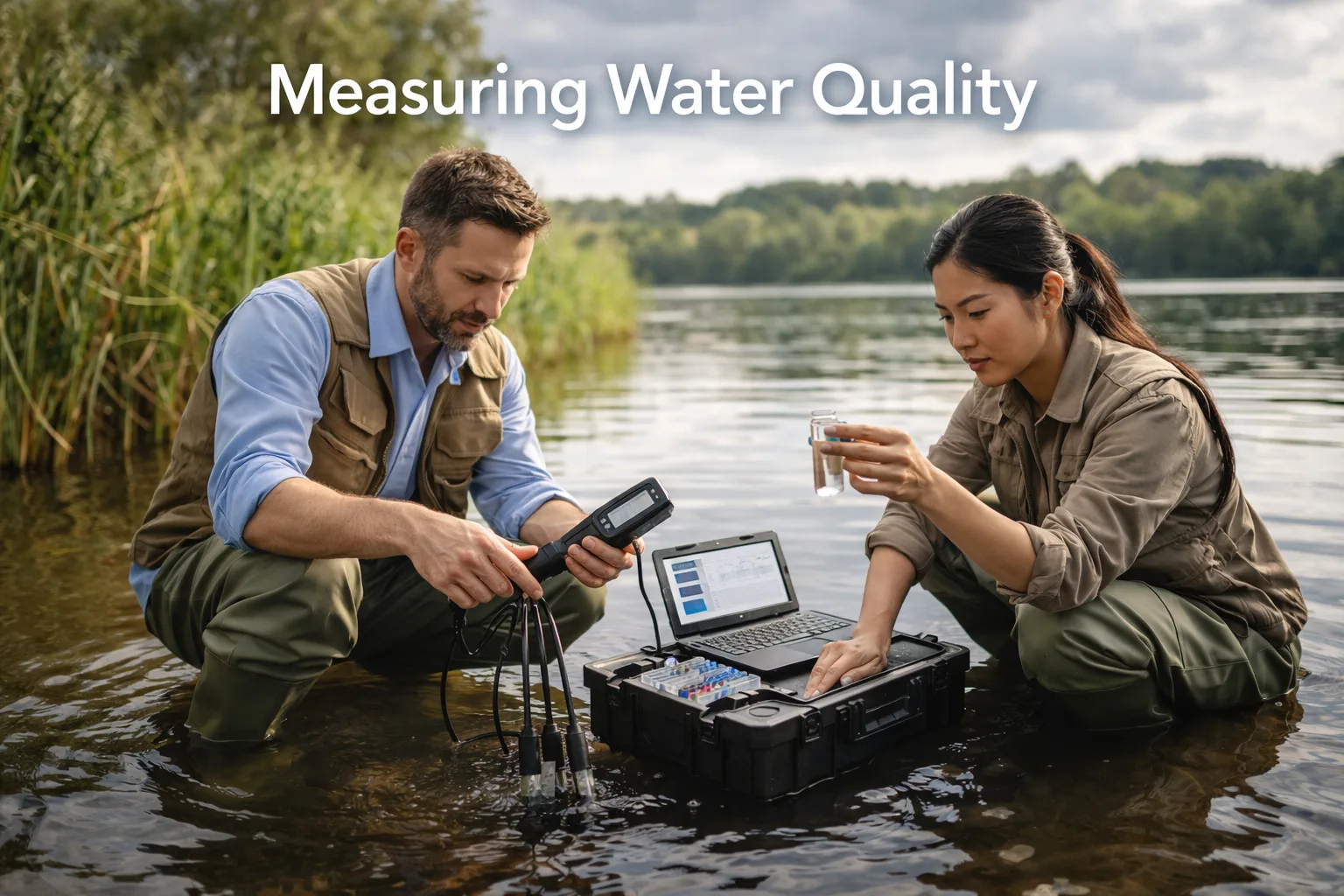
Field testing involves using portable instruments and kits to measure certain parameters directly at the sampling site. Common field tests include: • pH Meters: Provide quick and accurate measurements of water’s pH levels. • DO Sensors: Measure dissolved oxygen levels in real-time. • Turbidity Meters: Assess the clarity of water by measuring light scattering.
2. Laboratory Analysis
Laboratory analysis is necessary for more detailed and accurate assessment of water quality parameters. This involves collecting water samples and analyzing them using sophisticated instruments and techniques. Common laboratory methods include: • Spectrophotometry: Measures absorbance of specific wavelengths to determine concentrations of various substances. • Chromatography: Separates and identifies compounds in water samples, including pollutants and nutrients. • Mass Spectrometry: Detects and quantifies trace elements and contaminants with high precision. • Microbiological Testing: Identifies and counts microbial populations to assess contamination levels.
3. Remote Sensing
Remote sensing involves using satellite or aerial imagery to monitor water quality over large areas. This method is particularly useful for tracking changes in water bodies and assessing parameters like turbidity, algal blooms, and temperature. Importance of Regular Monitoring
Regular monitoring of water quality is essential to identify trends, detect pollution sources, and take corrective measures. It helps ensure compliance with environmental standards and protects public health. Key benefits include:
• Early Detection: Identifies potential issues before they become severe. • Data Collection: Provides valuable information for research and policy-making. • Environmental Protection: Supports conservation efforts and habitat preservation. Challenges and Future Directions Despite advancements in water quality measurement, challenges remain, such as: • Accessibility: Ensuring access to clean water in remote and underserved areas. • Funding: Securing resources for regular monitoring and advanced technology. • Climate Change: Addressing impacts of climate change on water quality.
Future directions in water quality measurement include the development of more affordable and portable testing kits, integration of artificial intelligence in data analysis, and increased collaboration between governments, communities, and researchers. In conclusion, measuring water quality is a complex but vital process that ensures the safety and sustainability of our water resources. By understanding and utilizing various parameters and methods, we can work towards a cleaner and healthier environment for all.