
Article
The Raspberry Pi: Revolutionizing
Computing Education
A Comprehensive Overview
Introduction
The Raspberry Pi is a series of small, affordable single-board computers developed by the Raspberry Pi Foundation with the intention of promoting the teaching of basic computer science in schools and developing countries. Since its inception in 2012, the Raspberry Pi has become a global phenomenon, inspiring a myriad of projects and innovations across diverse fields such as robotics, home automation, and even art. Designed to be accessible to anyone, from students to hobbyists to professionals, the Raspberry Pi embodies the essence of democratized technology. Its compact size, low cost, and versatility make it an ideal tool for learning, prototyping, and creating.
History and Development
The Raspberry Pi Foundation, a UK-based charity, was established in 2009 by Eben Upton, Rob Mullins, Jack Lang, and Alan Mycroft. The founders were motivated by the decline in computer science skills among students and envisioned a device that could reignite interest in programming and electronics.
The first iteration of the Raspberry Pi, known as the Model B, was released in February 2012.
This pioneering device featured a Broadcom BCM2835 system on a chip (SoC) with an
ARM1176JZF-S 700 MHz processor, 256 MB of RAM, and could run a variety of operating systems, including Linux and RISC OS. Its launch marked a significant milestone in computing education, providing an affordable platform for students and educators.
The Foundation has since developed several iterations of the Raspberry Pi, each iteration improving upon its predecessor in terms of performance, memory, and connectivity. The models include the Raspberry Pi Model A, B+, 2, 3, 4, and the Zero series, catering to different needs and budgets. Each new model brought enhancements that expanded the possibilities of what users could achieve with their Raspberry Pi.
Technical Specifications
The Raspberry Pi 4 Model B, the latest in the series, boasts impressive technical specifications:
• Processor: Quad-core Cortex-A72 (ARM v8) 64-bit SoC @ 1.5GHz • Memory: Up to 8GB LPDDR4-3200 SDRAM • Connectivity: 2.4 GHz and 5.0 GHz IEEE 802.11ac wireless, Bluetooth 5.0, Gigabit
Ethernet
• Ports: 2 × USB 3.0 ports, 2 × USB 2.0 ports, 2 × Micro HDMI ports supporting 4K resolution • Storage: MicroSD slot • Power: 5V DC via USB-C connector
With these specifications, the Raspberry Pi 4 Model B is capable of handling a wide range of tasks, from simple coding exercises to more complex projects involving artificial intelligence and machine learning.
Applications and Innovations
The Raspberry Pi has been heralded for its versatility and has found applications in numerous fields:
Education
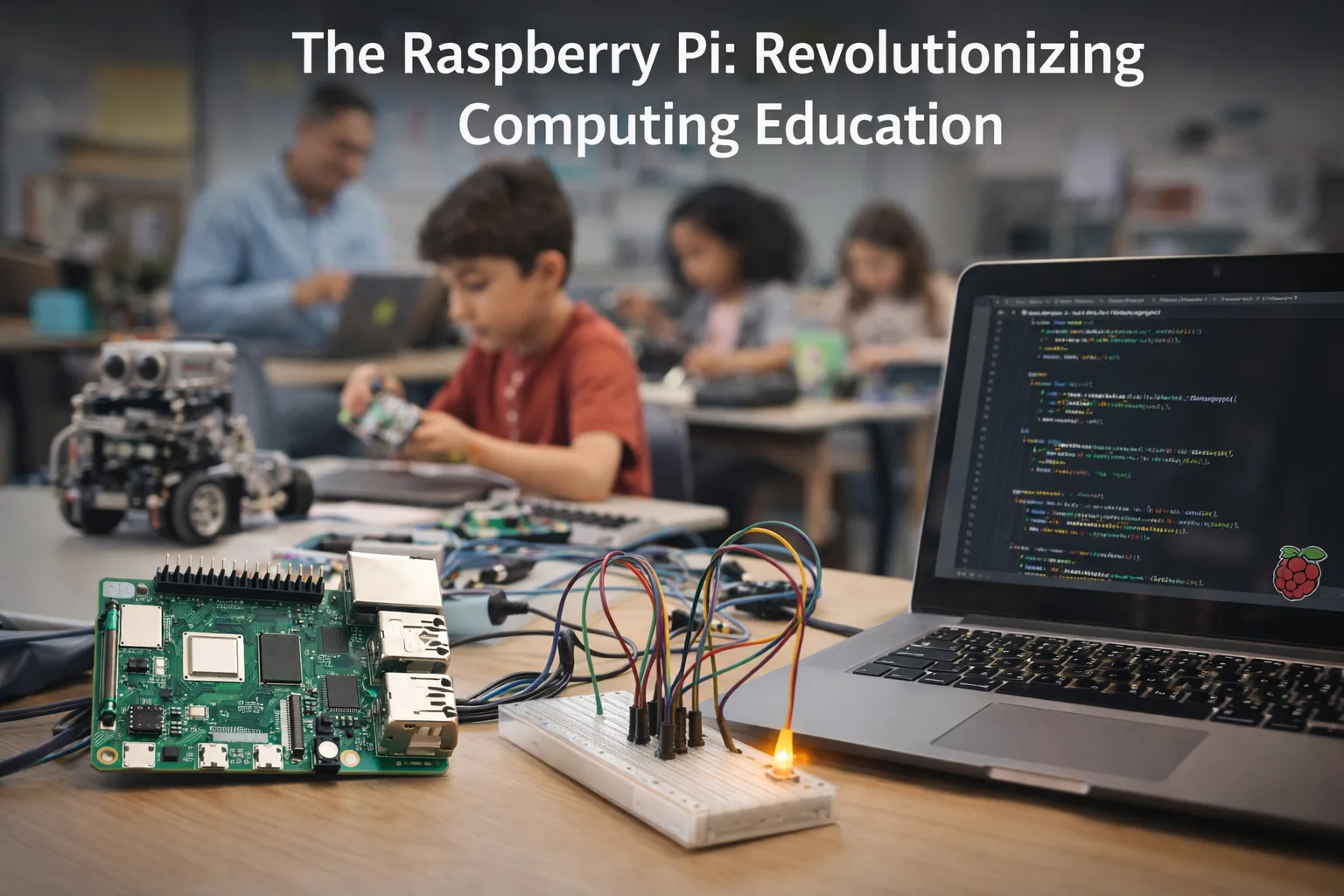
In classrooms around the world, the Raspberry Pi is used as an affordable tool to teach programming, electronics, and robotics. Its user-friendly interface and extensive
documentation make it an ideal platform for beginners. Educators appreciate its affordability and flexibility, which allow them to integrate hands-on computing experiences into their curriculum without significant financial strain.
Various educational kits and resources have been developed around the Raspberry Pi, further enhancing its utility in teaching environments. From coding clubs to university courses, the Raspberry Pi is an invaluable resource for fostering computational thinking.
Home Automation
Many enthusiasts use Raspberry Pi to automate their homes. It can control lights, temperature, security systems, and more with integration into smart home ecosystems. The Raspberry Pi’s ability to interface with different sensors and devices makes it a cornerstone in DIY home automation projects.
Projects such as smart thermostats, automated lighting systems, and home security setups showcase the Raspberry Pi’s capacity to bring convenience and efficiency into everyday life. Its community-driven nature means that users can find extensive support and inspiration for their home automation endeavors.
Internet of Things (IoT)
The Raspberry Pi serves as the backbone for many IoT projects due to its ability to connect to the internet and interact with other devices. It is used in weather stations, smart mirrors, and even wearable technology. The rise of IoT has seen the Raspberry Pi become a crucial tool for innovators looking to create interconnected devices.
Building IoT applications with the Raspberry Pi involves leveraging its networking capabilities, programmable interfaces, and compatibility with various sensors. This makes it a preferred choice for developers seeking to explore the cutting-edge realm of connected technology.
Media Center
With software like Kodi, the Raspberry Pi transforms into a powerful media center capable of streaming high-definition content to televisions and speakers. This application highlights the Raspberry Pi’s multimedia capabilities, making it a popular choice for home entertainment systems.
Users can set up their Raspberry Pi to stream movies, TV shows, music, and more, creating a customized media experience. Its compact size and powerful performance ensure that it can handle demanding media applications with ease.
Art and Creativity
Artists and makers use Raspberry Pi in interactive installations, digital art, and music projects, leveraging its ability to interface with sensors and other electronic components. The Raspberry Pi’s flexibility allows creators to push the boundaries of traditional art forms, integrating technology into their work.
From kinetic sculptures to generative music compositions, the Raspberry Pi opens up new possibilities for creative expression. Its programmable nature and affordability make it accessible to artists of all backgrounds.
Community and Ecosystem
A significant factor in the Raspberry Pi’s success is its strong community and extensive ecosystem. The Raspberry Pi Foundation provides a wealth of resources, including forums, tutorials, and an official magazine, “The MagPi.” Additionally, there are countless third-party accessories, add-ons, and software packages available, enhancing the device’s functionality and allowing users to tailor it to their specific needs. The support and collaboration within the Raspberry Pi community foster a vibrant environment for learning and innovation. Enthusiasts from around the world contribute to forums, share projects, and create tutorials, making the Raspberry Pi ecosystem a rich resource for anyone looking to explore its potential.
Future Prospects
The Raspberry Pi Foundation continues to innovate, with plans to release more powerful and versatile models. Future iterations are expected to focus on improving processing power, memory, and connectivity, while maintaining affordability and the ethos of accessible computing education.
Upcoming developments may include enhanced support for AI and machine learning, expanded connectivity options, and increased memory capacity. The Foundation’s commitment to education ensures that future models will continue to serve as valuable tools for learning and experimentation.
Conclusion
The Raspberry Pi has indeed revolutionized the world of computing education and beyond. Its affordability, versatility, and strong community support have made it an indispensable tool for hobbyists, educators, and professionals alike. As technology advances, the Raspberry Pi Foundation is poised to continue its mission of democratizing computing and inspiring the next generation of innovators. In summary, the Raspberry Pi’s impact on technology and education is profound. Whether used for simple programming exercises or complex IoT applications, its potential is limitless. The ongoing support and development from the Raspberry Pi Foundation and its community ensure that this remarkable device will continue to evolve and inspire.