
Article
The Hydrogen Economy – A Vision for a Sustainable Future
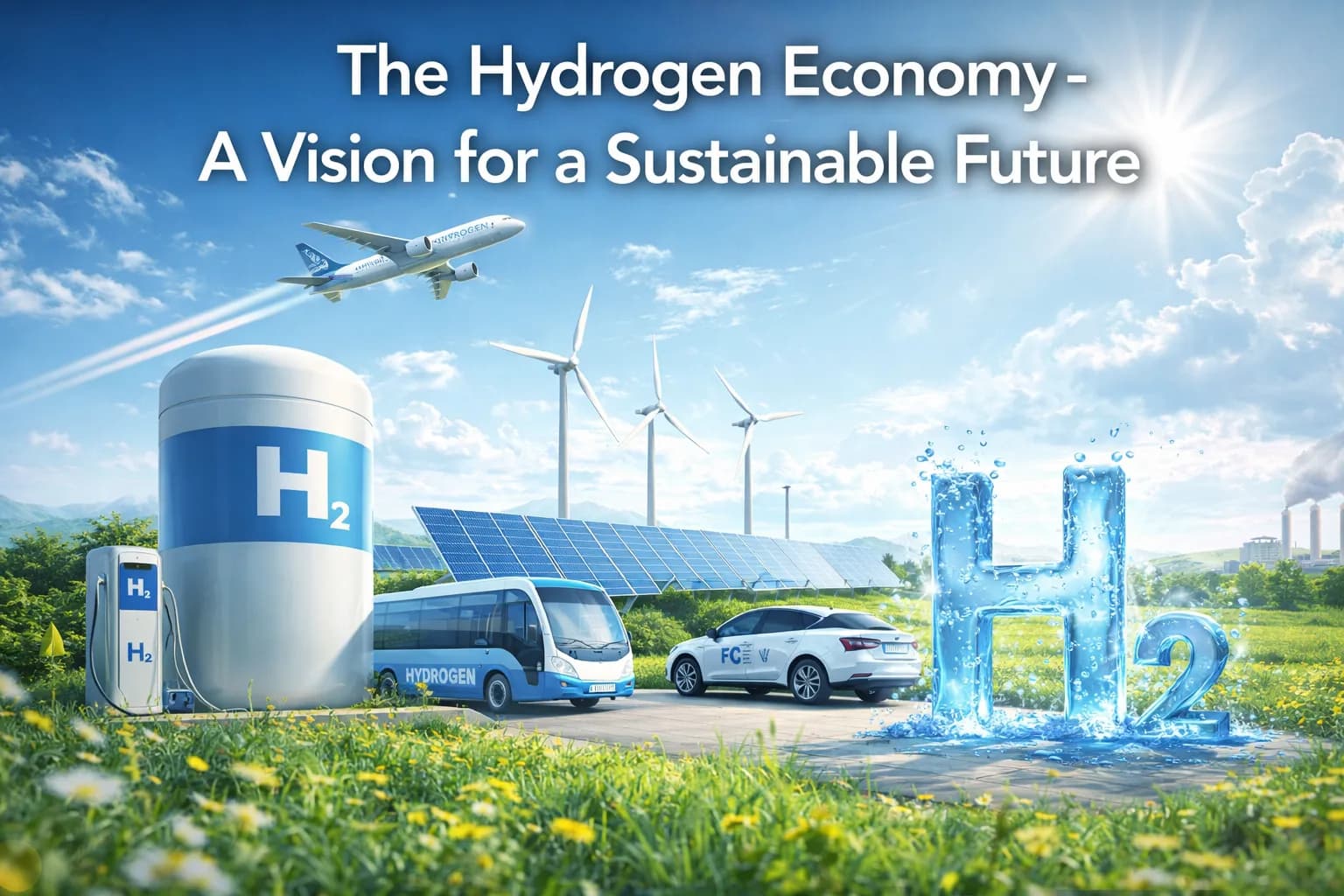
Understanding the Potential and Challenges of Hydrogen as an Energy Source
Introduction
The hydrogen economy represents a transformative approach to addressing the world’s energy needs, promising a cleaner and more sustainable future. Hydrogen, the most abundant element in the universe, has the potential to revolutionize how we produce, store, and utilize energy. This article explores the fundamental aspects of the hydrogen economy, its benefits, challenges, and the future outlook for this promising energy resource.
The Basics of Hydrogen
What is Hydrogen?
Hydrogen is a colorless, odorless gas that exists primarily in compound form with other elements. It is most commonly found in water (H2O) and organic compounds. Hydrogen can be produced through various methods, including natural gas reforming, electrolysis of water, and biological processes.
Types of Hydrogen
Hydrogen can be categorized based on its production methods:
• Gray Hydrogen: Produced from natural gas, emitting significant CO2 during production. • Blue Hydrogen: Also produced from natural gas, but with carbon capture and storage to reduce emissions. • Green Hydrogen: Produced from renewable energy sources like wind and solar through electrolysis, resulting in zero emissions.
Benefits of the Hydrogen Economy
Environmental Benefits
One of the most significant advantages of hydrogen is its potential to reduce greenhouse gas emissions. When used in fuel cells, hydrogen generates electricity with water vapor as the only byproduct, making it an environmentally friendly alternative to fossil fuels.
Energy Security
Hydrogen can be produced from diverse resources, including renewable energy, natural gas, and nuclear power. This diversification reduces dependence on a single energy source and enhances energy security for countries.
Versatility
Hydrogen has a wide range of applications, from powering vehicles and industries to providing electricity and heating. Its versatility makes it a key player in various sectors, including transportation, manufacturing, and residential energy.
Challenges in the Hydrogen Economy
Production Costs
Producing green hydrogen through electrolysis is currently expensive due to the high cost of renewable energy and electrolyzer technology. Reducing these costs is crucial for making hydrogen competitive with traditional fuels.
Infrastructure Development
A robust infrastructure for hydrogen production, storage, and distribution is essential for the hydrogen economy to thrive. Building this infrastructure requires significant investment and coordination among various stakeholders.
Storage and Transportation
Hydrogen has a low energy density by volume, making its storage and transportation challenging. Developing efficient storage solutions, such as high-pressure tanks and liquid hydrogen, is critical for widespread hydrogen adoption.
Regulatory and Safety Concerns
Hydrogen is a highly flammable gas, necessitating stringent safety measures and regulations for its handling and use. Establishing comprehensive safety standards and regulatory frameworks is vital for public acceptance and the safe deployment of hydrogen technologies.
The Future of the Hydrogen Economy
Technological Advancements
Ongoing research and development efforts aim to improve hydrogen production technologies, making them more efficient and cost-effective. Innovations in electrolysis, carbon capture, and storage, as well as advancements in fuel cell technology, will drive the hydrogen economy forward.
Researchers are also exploring the potential of using advanced materials to enhance the efficiency of hydrogen production. For instance, the development of new catalysts could significantly reduce the energy required for electrolysis, making green hydrogen more economically viable. Additionally, advancements in fuel cell technology, such as the development of solid oxide fuel cells and proton exchange membrane fuel cells, are expected to improve the performance and reliability of hydrogen-powered systems.
Government Policies and Support
Governments worldwide are recognizing the potential of hydrogen and implementing policies to support its development. Incentives, subsidies, and funding for hydrogen projects are crucial for accelerating the transition to a hydrogen-based economy.
For example, the European Union has launched the Hydrogen Strategy, which aims to increase the production and use of green hydrogen across member states. The strategy includes funding for research and development, as well as initiatives to create a comprehensive hydrogen infrastructure. Similarly, the United States has introduced the Hydrogen Energy Earthshot initiative, which aims to reduce the cost of clean hydrogen by 80% within the next decade.
Industry Collaboration
Collaboration among industries, research institutions, and governments is essential for overcoming the challenges of the hydrogen economy. Partnerships and joint ventures can drive innovation, share knowledge, and pool resources to achieve common goals. One notable example is the H2@Scale initiative in the United States, which brings together stakeholders from various sectors to advance hydrogen technologies. This initiative aims to develop an integrated hydrogen network that connects production, storage, and distribution facilities with end-users across multiple industries. Such collaborative efforts are vital for creating a cohesive and efficient hydrogen ecosystem.
Global Initiatives
Several global initiatives are promoting hydrogen as a key element of the energy transition. The Hydrogen Council, an international coalition of companies, aims to foster the development and commercialization of hydrogen technologies. Additionally, countries like Japan, Germany, and South Korea are leading the way with ambitious hydrogen strategies and investments. Japan, for instance, has set a target of becoming a hydrogen society by 2050, with plans to develop a comprehensive hydrogen supply chain and increase the use of hydrogen in transportation and industry. Germany’s National Hydrogen Strategy outlines a roadmap for expanding green hydrogen production and integrating hydrogen into the country’s energy system. South Korea’s Hydrogen Economy Roadmap aims to increase the production of hydrogen-powered vehicles and establish a network of hydrogen refueling stations.
Conclusion
The hydrogen economy holds immense promise for a sustainable and clean energy future. While there are significant challenges to overcome, the benefits of hydrogen as a versatile, abundant, and environmentally friendly energy source make it a compelling solution to the world’s energy problems. Through technological innovation, supportive policies, and global collaboration, the vision of a hydrogen economy can become a reality, paving the way for a greener and more secure energy landscape.
The transition to a hydrogen economy will require concerted efforts from governments, industries, and research institutions. By investing in research and development, building the necessary infrastructure, and implementing supportive policies, we can unlock the full potential of hydrogen as a key component of the global energy mix. The journey towards a hydrogen- powered future is undoubtedly challenging, but the rewards are well worth the effort, offering a cleaner, more sustainable, and resilient energy system for generations to come.